Forward Proxy
The forward proxy sits between the client and the Internet.
Think of the forward proxy as a funnel; all traffic goes through it. Yet it checks whether a request is allowed.
Also it’s necessary to configure the client to use the forward proxy.
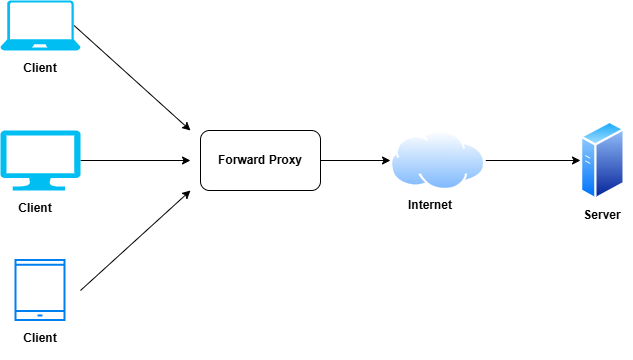
Here’s how it works:
- The client sends a request to the forward proxy.
- The forward proxy evaluates the request based on its filtering rules.
- If the request is allowed, the forward proxy forwards it to the destination server on behalf of the client.
- The destination server processes the request and sends the response back to the forward proxy.
- The forward proxy then relays the response back to the client.
Schools and corporate networks often install a forward proxy to control the sites people can visit. And one can set up a forward proxy using Nginx or Squid.
Here are some popular use cases of the forward proxy:
- Content Filtering: Organizations use forward proxies to block access to specific websites or content categories, ensuring that users adhere to company policies.
- Privacy and Anonymity: Individuals use forward proxies to hide their IP addresses and browse the internet anonymously, protecting their privacy.
- Caching: Forward proxies can cache frequently accessed web content, reducing bandwidth usage and improving load times for users.
- Access Control: Forward proxies can enforce authentication and authorization policies, ensuring that only authorized users can access certain resources.
- Bypassing Geo-restrictions: Users can utilize forward proxies to access content that is restricted in their geographic location by routing their requests through a server in a different region.